

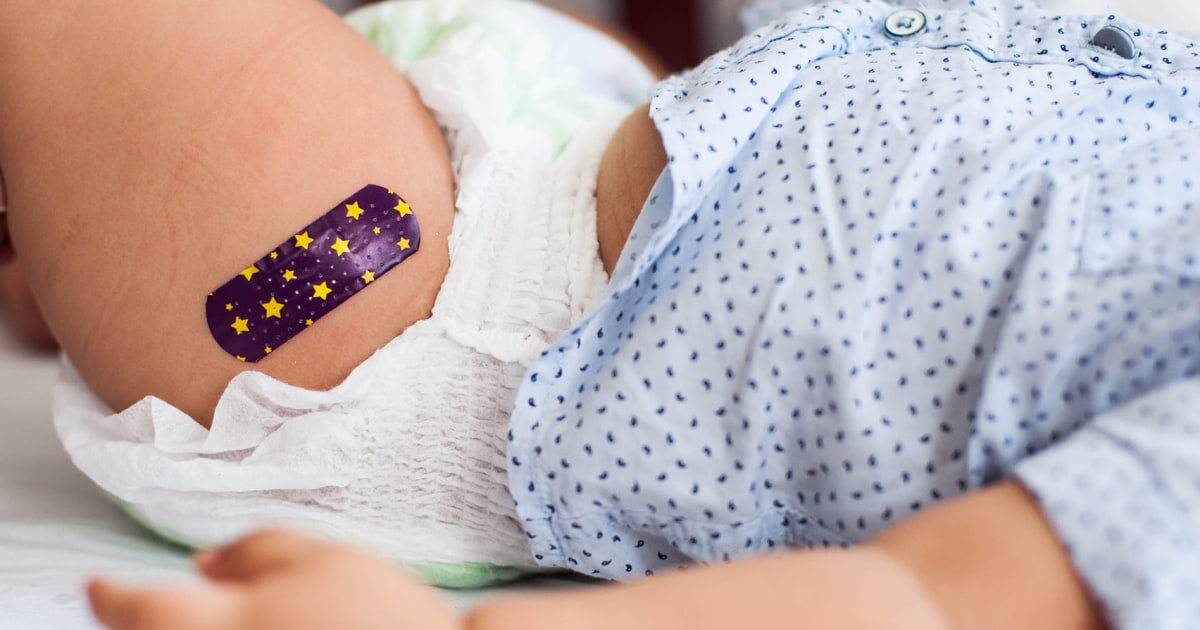
Under the leadership of Health and Human Services Secretary Robert F. Kennedy Jr., an anti-vaccine activist, the current U.S. childhood immunization schedule has come under scrutiny. In early December, the vaccine advisory panel for the Centers for Disease Control and Prevention voted to change the guidance that all newborns should get the hepatitis B vaccine. The panel, without presenting new evidence, suggested that babies wait until they’re 2 months old to be protected against the incurable, contagious liver disease. Other changes in vaccine recommendations may be planned for 2026.
The current U.S. childhood vaccine schedule, developed by infectious diseases experts, epidemiologists, pediatricians and other scientists, is based on the maturation of children’s immune systems and when they’re most likely to be exposed to viruses and other germs.
Babies protected against nine diseases
In a baby’s first few months, it’s currently recommended that they get vaccinated to protect against nine infectious diseases. In addition to RSV and the first hepatitis B shot (with a 2nd shot at 1 to 2 months of age and the 3rd shot at 6 to 18 months of age), first doses of five vaccines are given: diphtheria, tetanus and pertussis (DTaP); rotavirus, which protects against a life-threatening diarrheal disease; polio; pneumococcal; and Haemophilus influenzae type b (Hib), an infection that can lead to meningitis.
Typically, the first dose of the MMR vaccine is given between age 12 and 15 months, and the second is given between 4 and 6 years of age. To provide the best protection, a number of the shots, including the MMR, need to be spaced out in several doses, a timing determined after decades of research.
Among the children included in the study, on-time first-dose MMR vaccination rates declined from 79.9% in 2021 to 76.9% in 2024. Boys and children living in rural areas were slightly less likely to receive their MMR vaccines than the average child, the study showed.
Because the study only included children with consistent access to health care, it’s likely that these numbers are even lower in the general population.
“These numbers are conservative in terms of the magnitude of these effects if we were to include broad populations,” Masters said.
Angela Rasmussen, a virologist at the University of Saskatchewan, Canada, said the primary concern with delaying vaccines is that, “you’re going to be unprotected for a longer period of time while that delay is in place.”
Worries about the vaccine schedule, that children get too many shots at one time, or that combination vaccines are dangerous, are unfounded, she said. “There’s no evidence of any of these things.”
Risks from delaying first doses
“Our current vaccine schedule was chosen over many years and collecting quite a lot of data to show that those are actually the times to vaccinate people, when the risks are going to be minimized and the benefits are going to be maximized,” Rasmussen said.
The new study shows that changes to the childhood schedule, such as the hepatitis B vaccine delay, can sow distrust and have a “compound effect,” on other vaccines, Masters said. “Kids are going to be less likely to get vaccinated for all sorts of things, which means more kids at risk, which is a scary reality.”
That’s especially true of MMR doses.
Dr. Nathan Lo, an assistant professor of infectious diseases at Stanford University, said “if that first dose is delayed even further, say, two years, or what have you, then there’s an even bigger window for there to be gaps in susceptibility that put children at risk of measles, especially when measles is starting to circulate more in the United States.”
More than 2,000 cases of measles were reported in the U.S. in 2025, the highest number since 1992.
“Measles is sort of the canary in the coal mine, the smoke alarm,” said Dr. Lee Harrison, a professor of epidemiology and medicine at the University of Pittsburgh.
“When you start to see declines in coverage rates, then you start to see outbreaks,” Harrison said. “And that’s what we’re seeing.”
Challenges for pediatricians
The new study shows the importance of the relationship between pediatricians and parents.
The NBC News/Stanford University data investigation found that, among states that collect data for the MMR vaccine, 67% of counties and jurisdictions now have kindergarten immunization rates below 95% — the level of herd immunity doctors say is needed to protect against an outbreak.
“If you look at who gets measles, it’s, of course, people who are unvaccinated, but a lot of the cases are in children, and a lot of the cases are in children before their first dose, so often in that 6- to 12-month window,” said Lo, the lead collaborator in the NBC News data investigation..
Immunity that the baby gets from the mom wears off around 6 months of age, but the first dose of the MMR vaccine isn’t given until at least 12 months.
It’s not just vaccine hesitancy that could be driving these declines, however.
“People have barriers to care: it’s hard for them to get into clinic, it’s hard to get appointments, it’s hard to get time off work to take their child in. Or, it could be a strong fixed belief on wanting to follow some alternative delayed vaccine schedule,” Lo said. “The practical takeaway is, the minute a clinician sees that a child isn’t up to date on their vaccines, that, of course, raises your attention to seeing what can be done.”
The report shows the challenges pediatricians face building a trusted relationship with new parents, Masters said.
“It means pediatricians have to really engage early, right away about vaccines, provide education, provide a safe space for parents to ask questions and to provide reassurance about the safety and efficacy of the vaccines, really, before that 2-month visit,” she said.



