

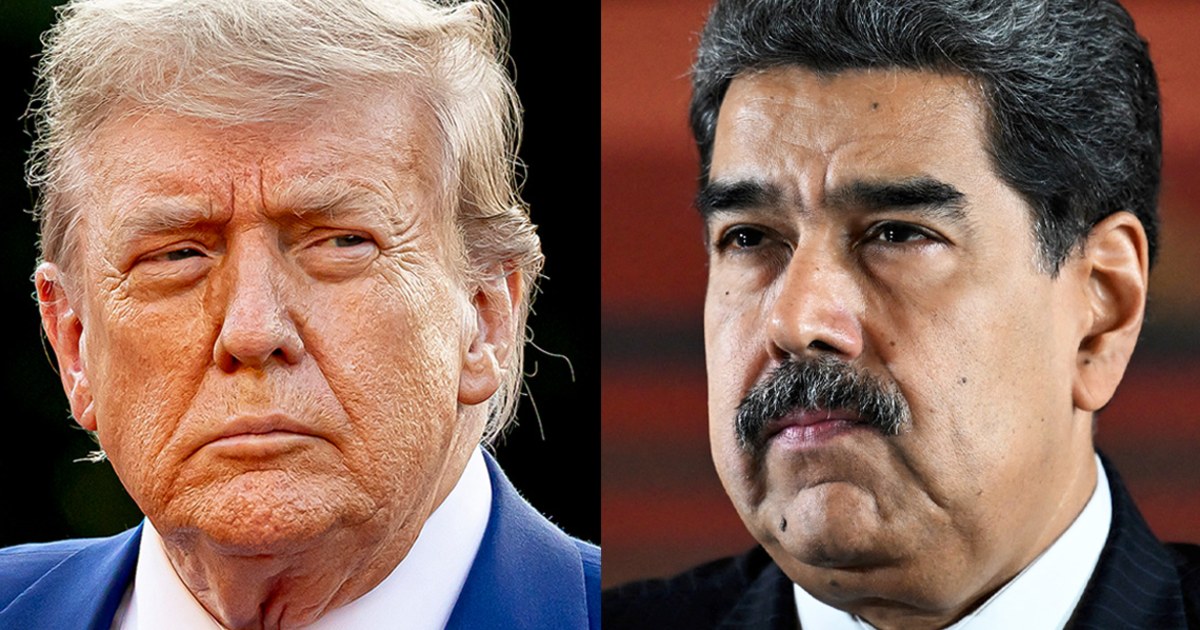
Venezuelan President Nicolás Maduro has said he is open to negotiating with Washington to combat drug trafficking in the first sign that sustained U.S. pressure is taking its toll on the embattled South American leader.
“The U.S. government knows, because we’ve told many of their spokespeople, that if they want to seriously discuss an agreement to combat drug trafficking, we’re ready,” Maduro said in a taped interview aired Thursday on state TV channel teleSUR.
But in his wide-ranging conversation with Spanish journalist Ignacio Ramonet, he declined to comment on an alleged ground attack on a docking facility along Venezuela’s shoreline last month, which some media reports said was conducted by the CIA.
The spy agency declined to comment on the reports it was behind what would be the first-known land attack on Venezuela by the U.S. The CIA rarely, if ever, publicly acknowledges its work.
But President Donald Trump said Monday the U.S. had “knocked out” a facility tied to Venezuela. “We just knocked out — I don’t know if you read or you saw — they have a big plant or big facility where they send the, you know, where the ships come from,” Trump said in the interview. “Two nights ago, we knocked that out. So we hit them very hard.”
Trump did not provide further details during the interview with WABC radio and NBC News has not independently confirmed the strike. The White House did not offer any further comment on his remarks when asked about them on Friday.
In an extraordinary and unprecedented acknowledgment from a commander in chief, Trump also said in October that he had authorized the CIA to take unspecified action in Venezuela.
Maduro’s interview comes in the midst of a monthslong pressure campaign by the Trump administration on the country that has seen dozens of deadly strikes on alleged drug-smuggling boats in the Caribbean Sea and the eastern Pacific and an increase in U.S. naval presence off the country’s coast.
In November, America’s largest aircraft carrier, the USS Gerald R. Ford, arrived in the Caribbean.
The White House says the strikes are aimed at stopping drug cartels and stemming the flow of narcotics into the U.S. But some U.S. lawmakers have questioned their legality and the use of the U.S. military to carry them out.

The latest strike on two alleged drug-trafficking vessels came New Year’s Eve, U.S. Southern Command said in a statement. Five people were killed, it said.
Since launching the strikes in September, the Trump administration has not provided evidence supporting its allegations about the vessels or the people on board.
The U.S. also seized oil tankers off the Venezuelan coast last month and has ordered a blockade of all sanctioned tankers and has worked to prevent them from going in and leaving the country.
Asked about what the U.S. is trying to achieve, Maduro said in his interview that it was seeking to impose itself “through threats, intimidation and force,” according to a translation of his interview by The Associated Press.

But he also appeared to strike a conciliatory tone, suggesting there was room for cooperation between Caracas and Washington — when it comes to drug trafficking and the country’s vast oil reserves.
“If they want oil, Venezuela is ready for U.S. investment, like with Chevron, whenever they want it, wherever they want it and however they want it,” he said.
Maduro has previously denied having any ties to the drug trade, and has accused the U.S. of “fabricating” a war against him. But he told Ramonet that he wanted peace and an amicable relationship between the two countries.
“The U.S. people should know that here they have a friendly, peaceful people, and they also have a friendly government,” Maduro said, according to the English translation of the interview published on teleSUR’s website.
The U.S. does not recognize Maduro as Venezuela’s legitimate president after the 2024 election was widely seen as rigged.
Trump said in November he was considering talks with Maduro, but in an interview the following month, he said that Maduro’s “days are numbered.” In a separate interview with NBC News, he said that he was not ruling out war with Venezuela.
Asked about the alleged strike on Venezuelan soil last month, Maduro seemed to evade the question, only saying he could talk about it “in a few days,” according to the AP translation.



