

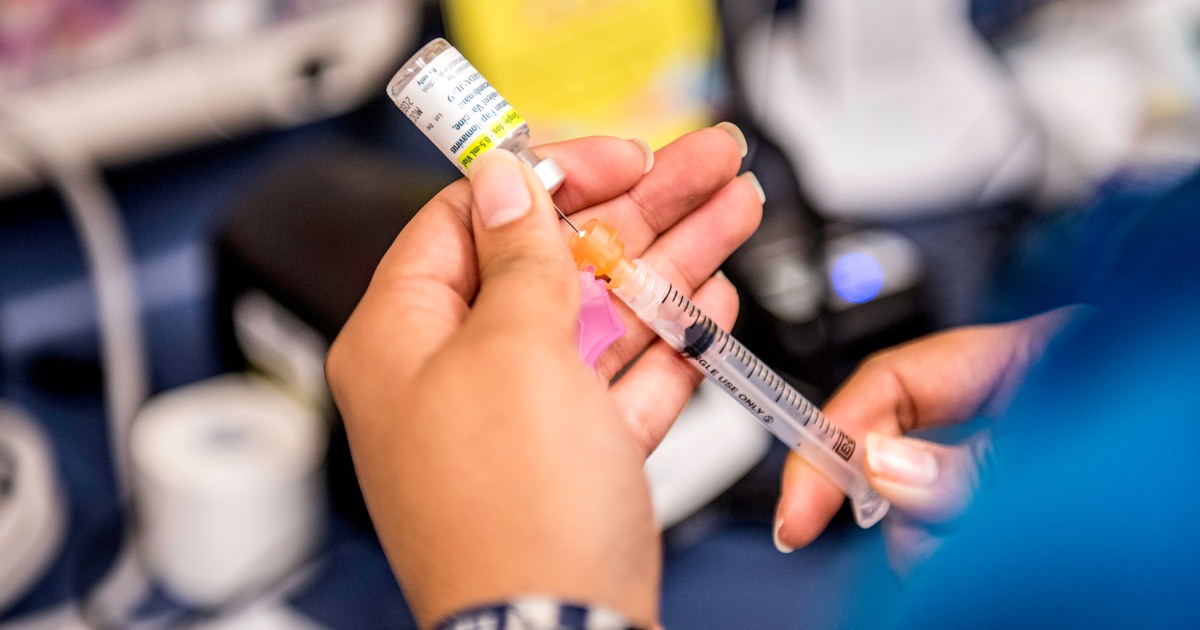
The HPV vaccine is very safe and highly effective at preventing cervical cancer, according to two large reviews that support routinely vaccinating adolescents against human papillomavirus.
HPV is the most common sexually transmitted infection and can cause genital warts. Merck’s Gardasil vaccine, the first version of which was approved in 2006, protects against nine cancer-causing HPV strains.
Nearly 60 randomized controlled clinical trials involving 160,000 participants, considered the gold-standard of scientific research, indicated that HPV vaccination is effective at preventing infection, as well as precancerous cervical lesions and genital warts. The two papers, published recently by Britain’s widely respected Cochrane Review team, also included 225 observational studies of more than 132 million people worldwide. Together, the studies showed that girls who were vaccinated against HPV before age 16 had an 80% lower cervical cancer risk.
“The vaccine works. Full stop,” said Dr. Linda Eckert, a professor of obstetrics and gynecology at the University of Washington and an expert in the causes of cervical cancer. “The vaccine is safe. Full stop.”
Eckert, who was not involved with the reviews, praised them as “methodically rigorous,” “robust” and “gold standard.”
The new reports are backed up by recent real-world findings. In late November, an Australian cervical cancer research organization announced that, almost certainly due to HPV vaccination, there were no new cases in 2021 in women under age 25, a milestone not seen since data had been gathered starting in 1982. Last year, Scotland’s public health agency found that there were no new cervical cancer cases in women fully vaccinated as youths.
“We did a search of social media, looking at all of the things that people were saying HPV was associated with,” said Jo Morrison, senior author of the Cochrane reviews and a gynecological oncology consultant at Somerset NHS Foundation Trust in England. According to her team’s papers, the claims included that the vaccine caused infertility, chronic fatigue syndrome and paralysis. “What we found was that the evidence very clearly shows that there’s no association with the various things that people worry about,” she said.
Specifically, the team found that serious adverse health outcomes were rare and occurred at similar rates regardless of whether trial participants received the vaccine or a placebo.
The reviews come as Health and Human Services Secretary Robert F. Kennedy Jr., an anti-vaccine activist, has increasingly stepped up scrutiny over childhood immunizations, overall.
Kennedy has profited financially from waging vaccine-injury lawsuits against Merck, the manufacturer of the Gardasil HPV vaccine. In 2019, he called Gardasil “the most dangerous vaccine ever.” Pressed during his Senate confirmation hearing by Sen. Patty Murray, D-Wash., Kennedy refused to say whether the vaccine was safe.
HHS didn’t return a request for comment.
The Centers for Disease Control and Prevention, in guidance established prior to Kennedy’s HHS tenure, recommends vaccinating boys and girls against HPV at ages 11 to 12, before they become sexually active. More broadly, the agency recommends Gardasil for ages 9 through 26. People up to age 45 are eligible for vaccination.
The HPV strains that Gardasil targets can cause multiple cancers in both men and women, including anal, vulval, oropharyngeal (back of the throat), vaginal and penile cancer. About 48,000 cases of cancer linked to HPV, including some 13,360 cervical cancer cases, are diagnosed annually in the U.S.
However, since HPV vaccination began, the U.S. cervical cancer rate plunged 65% from 2012 to 2019 among women in their early 20s — the first American cohort to receive the shots, according to a 2023 study from the American Cancer Society.
Morrison said the Cochrane reviews were likely only able to determine with certainty that the HPV vaccine prevents cervical cancer because the other HPV-linked cancers generally take longer to develop. For now, it’s unclear whether vaccination reduces rates of the other cancers, she said.
Anxieties about Gardasil have persisted since it was first approved two decades ago.
Morgan Newman, 35, of Norwalk, Iowa, was offered the HPV vaccine at a medical appointment the year Gardasil was approved. Then 16, she went against her parents’ wishes and declined, feeling the vaccine was too new and she didn’t know enough about it.
Eight years later, she was diagnosed with cervical cancer. She underwent chemotherapy and radiation, only for the cancer to metastasize two years later.
“You’re brought to the brink of death,” she recalled of the brutal treatment, which led to her infertility.
Nearly a decade into remission, Newman is an outlier for continuing to survive stage IV cervical cancer.

“Cancer is a gift wrapped in barbed wire,” she said, noting that she lives with lymphedema, a permanent side effect of chemo that causes painful fluid retention. “I’m grateful to be here, but I want to make sure that whatever I do has purpose behind it.”
She’s become a social worker and volunteers for Cervivor, a cervical cancer advocacy nonprofit.
Newman recalled her mindset as a teenager about the prospect that she could ever develop a vaccine-preventable cancer. “I told my mom, ‘No, that’ll never happen to me,’” she said.
According to annual CDC survey data, HPV vaccination rates, disrupted by the Covid pandemic, flatlined among 13- to 17-year-olds from 2022 to 2024. About 78% of these teens ultimately received at least one dose and 63% completed the multidose vaccination. Meanwhile, rates of other vaccinations the CDC recommends for adolescents increased during this period and topped 90%.
A 2024 study published in The Lancet Regional Health found that white families in the U.S. and those with higher incomes were less likely to intend to vaccinate their children against HPV; safety concerns were the most common reason.
Among the worries are that providing a vaccine against an STI might eventually lead to sexual risk-taking among children, although Harvard University-based research has found no evidence to support it.
A Seattle mother who requested her name not be used for privacy said she hesitated when her pediatrician recommended Gardasil for her adolescent children, now 15 and 17.
“I remember thinking, well, my kids aren’t sexually active,” the 49-year-old mother said of the prospect of vaccinating against an STI. “Then I thought, well, I might as well just do it. Let’s cover all the bases.”



