

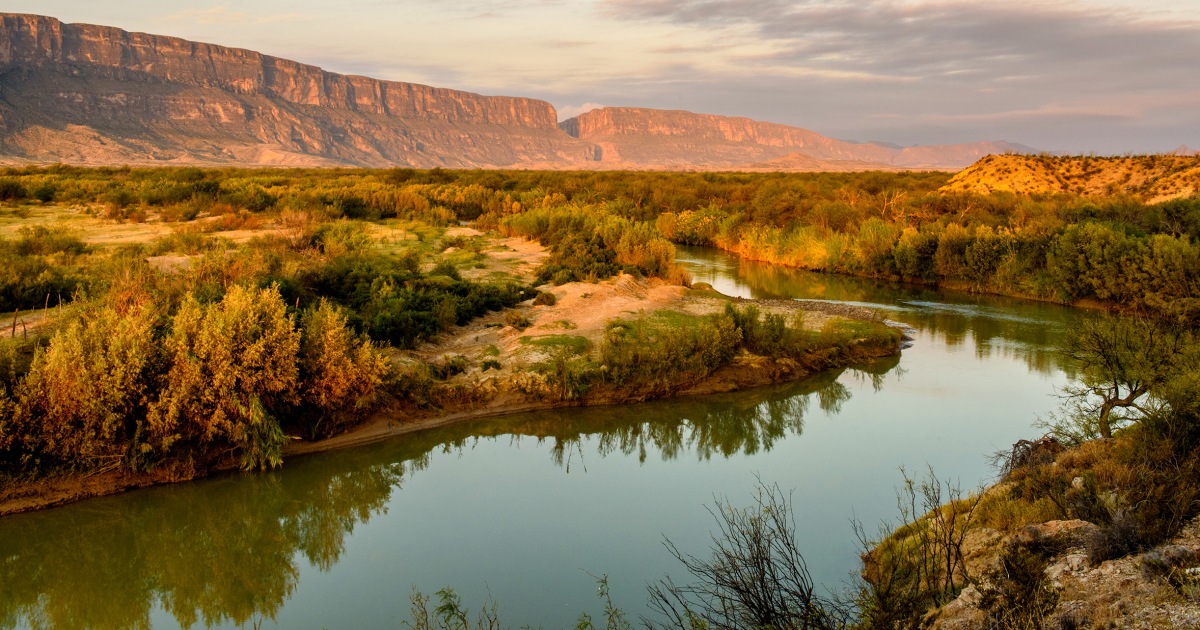
Two hours from the closest stoplight, the Rio Grande runs through rugged canyons under the darkest skies in the Lower 48 states, carving cliffs that drop 1,500 feet below the desert floor of the beautifully desolate Big Bend National Park.
The few who call the region home feel a unique bond to the land. In their eyes, it’s the kind of natural barrier that steel cannot supplement. It’s one reason why the Big Bend has so far been spared from the bulldozer crews that come with new stretches of border wall.
“We’ve got a God-made barrier,” said Terrell County Sheriff Thaddeus Cleveland, a Republican who oversees a department of five deputies just east of Big Bend.
But this year, the Trump administration is forging ahead with a plan Cleveland never thought he would see.
Locals and elected leaders from both parties across far West Texas are condemning the Department of Homeland Security’s newly revealed plans to build a border wall through Big Bend National Park and its neighboring state park. They are warning it will cut off access to popular destinations, choke off tourist dollars and disrupt one of the nation’s most pristine regions, while doing little to stop illegal immigration.
“It’ll ruin this county,” said Brewster County Sheriff Ronny Dodson, a Democrat who has held office in his solidly red county for more than two decades. “If it’s a real wall, it will devastate us. We don’t have oil and gas, we have tourism.”
Customs and Border Protection’s public plans include more than 100 miles of planned border wall throughout Big Bend National Park, cutting off access to much of the Rio Grande from the American side.
CBP told NBC News the entire 517-mile stretch of the Big Bend sector’s border is set to receive new infrastructure or upgrades, including areas within the national and state parks.
Last week, Homeland Security Secretary Kristi Noem waived 28 environmental protection laws and regulations to expedite construction of the border wall in the Big Bend region, citing “an acute and immediate need to construct additional physical barriers and roads in the vicinity of the border of the United States in order to prevent unlawful entries.”
“CBP has and will continue to coordinate with stakeholders, and other federal agencies, during the planning and construction process to minimize impacts where physical barriers will be constructed to the greatest extent practicable, while still meeting the Border Patrol’s operational requirements,” a CBP spokesperson said in a statement.
Contracts for these projects are expected to be awarded “in the coming weeks and months,” according to the agency, and construction is expected to begin toward the end of this year “upon completion of land acquisition.”
Dodson told NBC News that real estate agents recently contacted the county looking for land to build a “man camp” for some 300 workers in South Brewster County. According to the region’s local newspaper, The Big Bend Sentinel, furious landowners have been contacted by federal contractors about using their property for staging areas and camps.
“The steamroller seems to be moving,” Brewster County Judge Greg Henington, a Republican, told NBC News. “Contractors are swarming our area, asking questions about man camps and leases … there hasn’t been a whole lot of transparency.”
Before Henington was elected county judge, he was a paramedic in Terlingua and an outfitter for river trips along the Rio Grande. Those perspectives gave him an appreciation for the delicacy — and the dangers — of this region.
“The terrain itself is a wall,” he said. “We don’t have a problem with monitoring the border. The volume’s not very high.”
CBP encountered 734 people in the Big Bend sector in fiscal year 2026 to date, according to the agency’s public data. That amounts to less than 3% of total encounters across the southern border in that time period.
“Since Trump closed the border, we’re down I would say 90%. I think we’ve caught one smuggler in the last three months,” Dodson said.
Local leaders are essentially universally in favor of border security and fiscal discipline, but they say a physical wall in their county would accomplish neither.
“From an economic standpoint, why are we going to spend all this federal money?” Henington said. “I think there are other ways to get this job done than just close our eyes and start building walls.”
One county and two hours over, Cleveland, the Terrell County sheriff, said he would welcome more “smart wall” technology, consisting of technological improvements and surveillance tools, rather than a physical barrier.
“I’m a strong supporter of wall where it’s needed,” he said. But, he added, “in some of these places, there are things the government could do that would save money. It’s something I never thought we would see.”
Henington says he has not been able to get in touch with federal partners for clarity on what residents should expect as federal contractors prepare to arrive. He says he only hopes to talk to them soon.
“At the end of the day, we just want to have a conversation,” he said. “Our goal is to see if we can protect a very beautiful resource and not damage our economy … This is one of the last frontiers in the Lower 48. This is some wild country down here. We don’t see much of that anymore.”



