

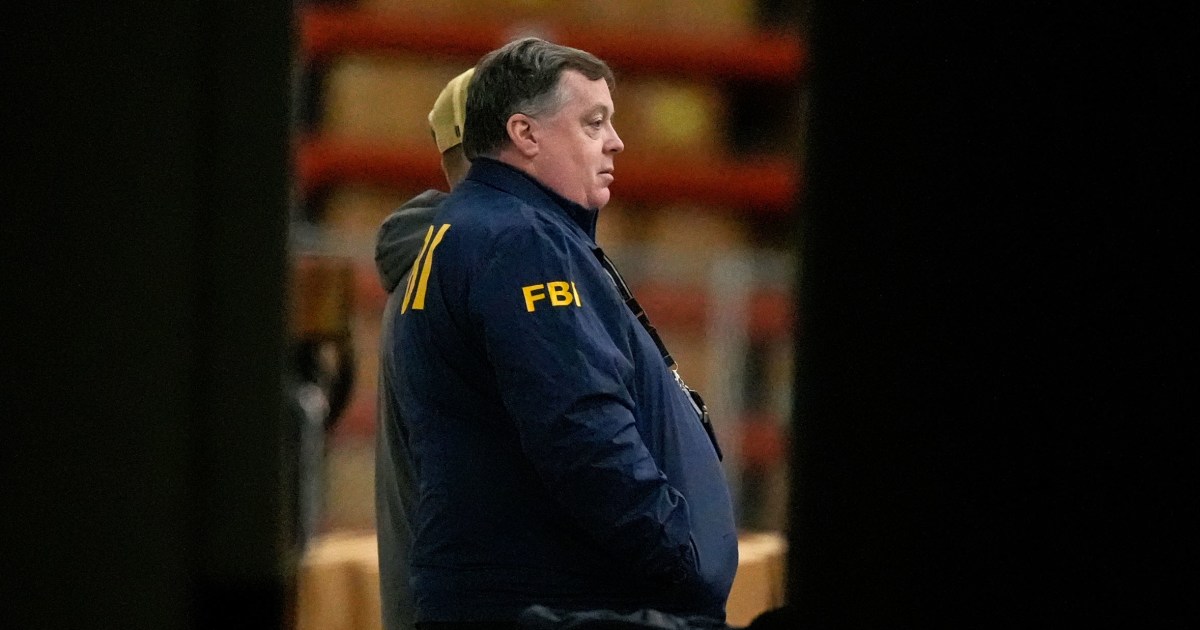
Election officials from across the country pushed back on Thursday against the Trump administration’s increasingly combative tactics, following an FBI raid in Fulton County, Georgia, and a growing number of Justice Department demands for voter rolls.
When election officials convene in Washington, D.C., every winter, as they did Thursday, it typically results in congenial and bipartisan discussions with experts and federal officials on the voting process.
But this year’s meeting kicked off in a much tenser manner. The day before, the FBI conducted a search of an elections hub in Fulton County seizing ballots and records related to the 2020 election. The county has long been a focal point of unfounded fraud claims from President Donald Trump and his allies.
And it also came as dozens of states have been sued by the Department of Justice over their demands for unredacted voter rolls, with Attorney General Pam Bondi most recently tying that request to the federal immigration enforcement operation that’s rocked Minnesota.
Some of the state officials said these moves only served to undermine Americans’ faith in elections heading into the 2026 midterm and 2028 presidential campaigns.
“All those folks in Fulton County — whose work has been proven to be good, whose work has been proven to be solid over and over and over again — have to suffer the humiliation. How in the world is that going to change anything? How in the world is that going to make anything better? It’s just not,” said Arizona Secretary of State Adrian Fontes, a Democrat.
“Here we go again,” added Michigan Secretary of State Jocelyn Benson, also a Democrat. “The bottom line is the 2020 election was secure, it was accessible, and it was an accurate reflection of the will of the people. If there was any evidence to the contrary, we would have found it by now.”
Still, after years of defending American elections from attacks by Trump and his supporters, Benson said it’s steeled the resolve of state officials.
“State officials are really all we have left in terms of guardrails over these processes,” she said.
While several Trump officials were scheduled to speak on a panel Thursday morning titled “Federal Assistance with 2026 Elections — Ask the Feds,” just one aide, Jared Burg, appeared on the podium. He talked up White House meetings and collaboration with states on election administration.
The reception was icy. Dozens of state officials have refused to provide their voter rolls to the Justice Department, noting that state laws prohibit it and that federal officials have not said how the information would be used.
Utah Lt. Gov. Deidre Henderson, a Republican who oversees her state’s elections, condemned statements made by Assistant Attorney General Harmeet Dhillon that the administration’s pursuit of voter rolls was due to states not maintaining them as “quite appalling.”
“She’s pretty much slandered all of us. To me, that’s problematic to publicly claim that secretaries of state are not doing our jobs and that the federal government has to do it — not OK,” she said.
Maine Secretary of State Shenna Bellows, a Democrat, said she wasn’t invited to the White House for the discussions Burg had touted.
“The Constitution places the states, not the federal government, in charge of our elections, and places Congress, not the president, in charge of making laws. How do you square the executive order with the Constitution and legislative arm?” Bellows said.
She referred to an executive order signed by Trump last March that attempted a major overhaul of American elections, requiring people to prove their citizenship when they register to vote, among other sweeping changes. A federal court blocked implementation of the order late last year.
In interviews, several state election chiefs expressed concern about their degrading relationship with the federal government.
Nevada Democratic Secretary of State Cisco Aguilar said the Trump administration was working to intimidate state election officials into compliance.
“They just used American lives to try and intimidate a state into providing certain information,” Aguilar said. “That is horrendous.”
Others said they were worried about the lack of federal support, particularly following spending cuts that decimated the Cybersecurity and Infrastructure Security Agency (CISA) that had helped states defend against threats.
“Secretaries have reached out last year to say, how will we get this type of information? We’re still waiting for an answer,” said Connecticut Secretary of State Stephanie Thomas, a Democrat. “We have not had any cyber, foreign interference briefing since last January.”
State election officials will have the chance to hear more from the Trump administration on Friday, as Attorney General Pam Bondi and Department of Homeland Security Secretary Kristi Noem are set to address the gathering.

Several of the Republican officials present said they wanted more information about the FBI’s search of a Fulton County elections facility — resulting in the seizure of 700 boxes, according to County Commissioner Rob Pitts — before weighing in.
“I want to learn a little bit more about what’s going on before I comment on that,” said New Hampshire Secretary of State David Scanlan. “We have our own issue in New Hampshire where we’re being sued” for voter roll data.
West Virginia Secretary of State Kris Warner said he was “anxious” to see what information the administration provided “that allowed the court to provide a warrant.”
And Missouri Secretary of State Denny Hoskins said, “If the FBI’s come in, there must have been smoke there and questions they wanted to get answered.”



