

The Trump administration’s capture of Venezuelan leader Nicolás Maduro and President Donald Trump’s plans to open that country’s oil reserves to major energy companies has sparked a resurgence of pro-colonialist sentiment among some prominent figures inside the White House and the broader MAGA political movement.
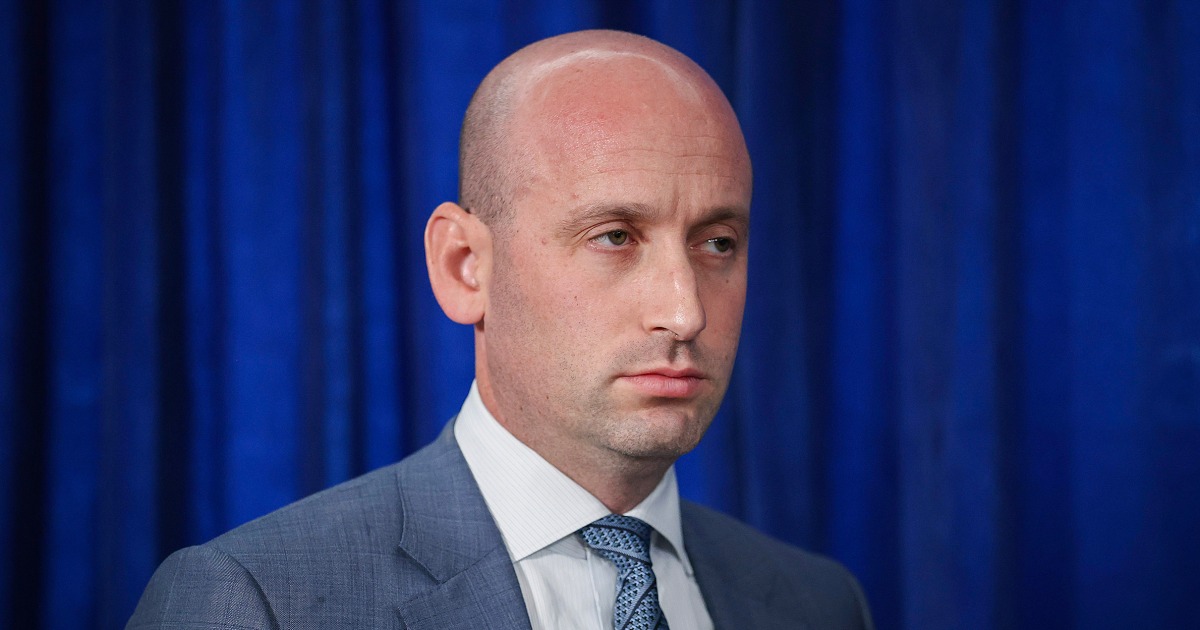
“Not long after World War II the West dissolved its empires and colonies and began sending colossal sums of taxpayer-funded aid to these former territories (despite have already made them far wealthier and more successful),” White House deputy chief of staff Stephen Miller, one of the aides Trump has tasked with overseeing the Venezuelan government, wrote on X the day after American forces raided Maduro’s compound and brought him to the U.S. for trial on a series of charges.
“The West opened its borders, a kind of reverse colonization, providing welfare and thus remittances, while extending to these newcomers and their families not only the full franchise but preferential legal and financial treatment over the native citizenry,” Miller wrote. “The neoliberal experiment, at its core, has been a long self-punishment of the places and peoples that built the modern world.”
The ode to colonialism, delivered by an aide who has been described as Trump’s id, comes as Venezuela’s stability is in question and Trump has cast his eyes on Colombia, Cuba and Greenland — two independent nations and one large territory that has long belonged to Denmark.
Miller’s take is at odds with most mainstream scholarship on the topic of colonialism, not to mention the ethos of political self-determination and economic independence that fueled the American revolution. In the journal Philosophy and Public Affairs, University of Arizona professors Ritwik Agrawal and Allen Buchanan wrote in February that the “fundamental wrong” at the heart of the “immorality of colonialism” is “colonizers regarded the colonized as incapable of managing their own affairs, in effect relegating them to the status of minors or mentally incompetent adults.”
That view of colonizers, they argued, laid the foundation for political and economic dominance and the “inequalities of power that persist today and that continue to contribute to economic injustices and to the failure to regard the weaker as equals.”

So far, the vision Trump has laid out for Venezuela — America exercising control over the country’s government from afar while rebuilding its oil infrastructure — hews closer to imperialism than colonialism. The latter would involve sending settlers to Venezuela to fundamentally alter its politics, its institutions and its culture.
“Imperialism is simply when country A externally controls country B or territory B,” said Bruce Gilley, a professor of Politics and Global Affairs at Portland State University who wrote the book “The Case for Colonialism,” based on a controversial article he authored. “It doesn’t imply anything about what you do there. Indeed it implies a kind of hands-off attitude.”
In the wake of the raid and subsequent declaration of American authority over Venezuela, some in the MAGA movement have begun to publicly embrace a form of interventionism — colonialism — that once seemed at 180-degree odds with an ethos of deep antipathy for foreign wars and aid.
“Colonization is one of the greatest things that ever happened to the backwards parts of the world and the only reason most don’t know this is because they were educated by communists who hate Western civilization,” Jesse Kelly, a right-wing broadcaster, wrote on X Jan. 4.
Elon Musk, a close ally of the president, retweeted a lengthy X post from conservative commentator Lauren Chen that stopped short of endorsing colonialism but that argued for a reinterpretation of its effects on countries subjected to it.
“People often say that the developing world is poor because the Western world colonized them and stole their resources. The truth, however, is that over the past century, the developing world has, for the most part, shown that they are completely incapable of harnessing their own resources,” she wrote, pointing to Venezuela as an example. “They are poor because they do not know how to run and administer their own countries, resources be damned.”
Toward the end of her post, Chen added, “Now, none of this is to say that colonialism is good. … However, the idea that colonialism and resources extraction are responsible for the developing world’s ongoing poverty? That is quite simply a crock of shit.”
And MAGA influencer Matt Walsh, without using the terms “colonialism” or “imperialism,” argued that the U.S. should seize power in foreign countries to extract natural resources.
“First of all, the ‘war’ lasted like 90 minutes,” he wrote in a post to his 4 million X followers. “Second, going to war to secure vital resources for your own people is totally legitimate. Why should we allow some third world communist shithole to control trillions of dollars worth of oil?”
A White House press aide did not respond to a request to make Miller available for an interview, but he described the U.S. relationship with Venezuela in decidedly imperial terms during an interview with CNN’s Jake Tapper this week.
“By definition, we are in charge because we have the United States military stationed outside the country. We set the terms and conditions. We have a complete embargo on all of their oil and their ability to do commerce,” Miller said. “So for them to do commerce, they need our permission. For them to be able to run an economy, they need our permission. So the United States is in charge. The United States is running the country during this transition period.”
Some Republicans have questioned whether a long-term engagement in Venezuela fits with the “America First” mantra Trump campaigned on, particularly at a time when many Americans say they are struggling to make ends meet at home.
“Wake up MAGA. VENEZUELA is not about drugs; it’s about OIL and REGIME CHANGE,” Rep. Thomas Massie, R-Ky., a frequent Trump critic, wrote on X Jan. 4. “This is not what we voted for.”
But Trump insisted in the interview with NBC News that his MAGA base will stick with him.
“MAGA loves it. MAGA loves what I’m doing. MAGA loves everything I do,” Trump said. “MAGA is me. MAGA loves everything I do, and I love everything I do, too.”
For the time being, U.S. officials say, they are working with former Vice President Delcy Rodriguez — a onetime Maduro ally who has been sworn into Venezuela’s presidency — to administer the country. Trump said in an interview with NBC News Monday that Rodriguez has been cooperating with the U.S. and talking to Secretary of State Marco Rubio directly.
There’s a long history of American presidents backing Latin American leaders — or seeking to remove them — based on their willingness to bend to U.S. will, said Duke University history professor John D. French, who has studied Latin American politics for more than four decades.
“Trump is completely consistent with American policymaking, which is that countries have interests, they don’t have friends,” French said, noting that the U.S. will not perceive colonialism as in its interests.
“The U.S. never intended to annex Iraq or annex Afghanistan … because we don’t want to do that,” he said. “What we want to do is put people in power who we believe will serve our interests.”
For now, that means working through Rodriguez as U.S. officials figure out what can and cannot be accomplished through her.
“They’re not rushing into it, and that’s OK for now,” Gilley, the Portland State professor, said. “The United States has enormous leverage in this situation.”



