

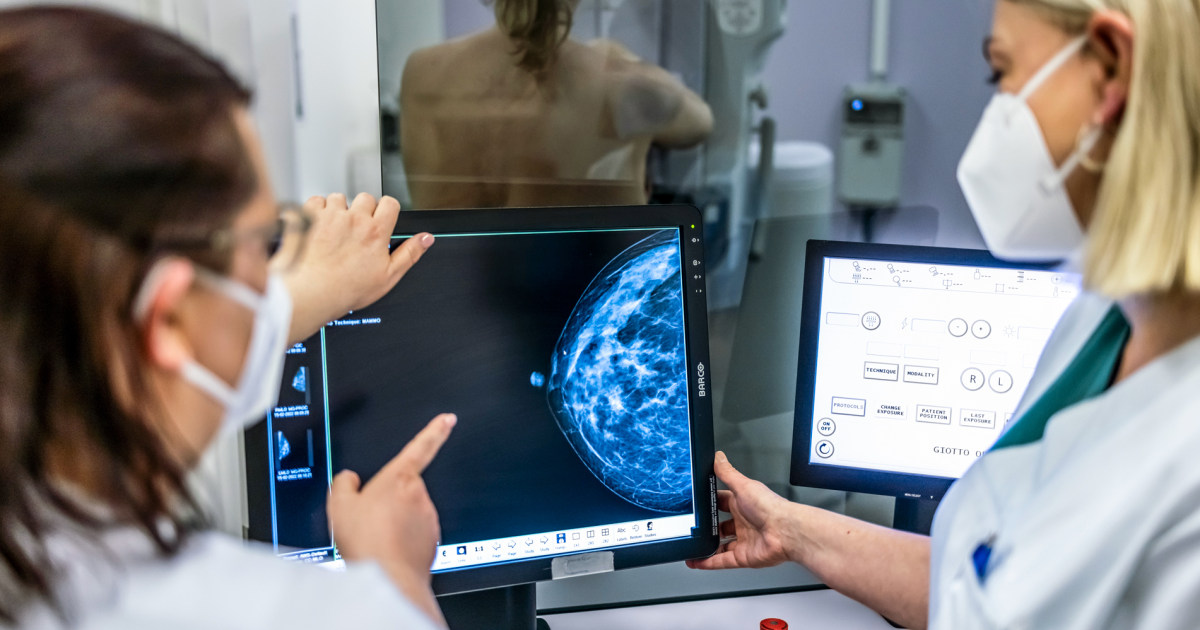
Nancy Preston didn’t have a heart attack. Nor did she have chest discomfort, shortness of breath or heart palpitations — all symptoms of heart disease. Instead, a routine mammogram led to Preston having quintuple bypass surgery last summer.
“It was just something horrible waiting to happen,” said the 67-year-old from New York City. “I did not have symptoms, except for feeling a little more fatigued than usual, which I attributed to age.”
Preston does have a family history of heart disease. Her mother had a heart attack and a double bypass, and an older sister had a heart attack and has a pacemaker.
Even so, heart disease wasn’t top of mind for Preston, a yoga enthusiast who exercised daily and followed a healthy diet. Her high blood pressure and Type 2 diabetes — two conditions that can increase a person’s odds of developing heart disease — had been under control before her health scare, she said.
In October 2024, Preston got her annual mammogram at the Mount Sinai Health System in New York. Doctors detected breast arterial calcifications, or BAC, on Preston’s mammogram.

What are breast arterial calcifications?
Breast arterial calcifications are calcium buildups within the breast arteries that may be associated with heart disease. Mount Sinai is conducting a behavioral study to understand how women react to being notified about the arterial calcifications with their mammogram results.
After Preston, who is participating in the study, was notified of her breast arterial calcification, she underwent a cardiac stress test, which monitors the heart during physical exertion.
“In [Preston’s] case, her heart function was very strong at rest, but during the stress portion, part of her heart muscle was not squeezing appropriately,” said Dr. Mary Ann McLaughlin, a cardiologist at Mount Sinai Fuster Heart Hospital. “Her results indicated multivessel coronary artery disease.”
McLaughlin and Preston believe the BAC findings saved her life.

“The only reason that Nancy went ahead with a stress test was because she was a participant in the study,” McLaughlin said. “If she had come to me with what she had, which was well-controlled risk factors and no symptoms, I likely would not have referred her for the stress test.”
Preston continues to recover from the major surgery she had in July. “Thank God this BAC was shared with me,” she said.
The U.S. Preventive Services Task Force recommends women ages 40 through 74 get a mammogram every other year to screen for breast cancer. While federal law mandates that certain information, such as breast density, be included in mammography reports, providers don’t have to mention breast arterial calcifications.
Dr. Laurie Margolies, chief of breast imaging at the Dubin Breast Center at Mount Sinai and a leader of the study, hopes to change that.
“In over 10% of mammograms, you will see calcified arteries, and people are always surprised,” said Margolies, who has been studying the relationship between breast arterial calcification and heart disease for about a decade. “When the arteries are calcified in a woman’s breast, it only makes logical sense that vessels might be calcified elsewhere.”
Breast arterial calcifications, which are specific to breast arteries, are different from the calcifications common to other areas of the breast. Macrocalcifications, which appear as white dots on a mammogram, are typically benign, according to the National Cancer Institute. Microcalcifications appear as white specks and may indicate cancer in some cases. About half of women develop benign breast calcifications.
The Mount Sinai study, which began recruiting patients 40 and older in 2021, aims to analyze BAC rates in a diverse sample of 14,875 women. Margolies estimates 12.5% of women in the health system have breast arterial calcifications, including those with known heart conditions.
The second part of the study randomly splits 1,888 patients with breast arterial calcifications into two groups. Women in the first group are notified of their results, educated about heart disease risk and encouraged to consult a preventive cardiologist. Women in the second group receive a standard mammography letter, then are notified of their BAC readings six months later.
Results are expected in early 2027.
How breast screening helps detect heart disease
A 2018 review published in the Journal of Cardiovascular Imaging advocated for mammography as a screening tool for heart disease. A 2022 study published in the journal Circulation: Cardiovascular Imaging found an association between breast arterial calcification and heart disease in postmenopausal women ages 60 to 79, while 2024 research published in the journal JACC: Advances noted that BAC was “especially predictive” of heart disease in younger women ages 40 to 59.
Dr. Naomi Ko, section chief of breast medical oncology at NYU Langone Health, said the Mount Sinai study adds to a growing body of evidence that cardiovascular disease clues lie in the breasts.
In some cases, women may be able to improve their heart health through behavioral and medication changes to stave off more serious medical intervention.
“Give me an opportunity to counsel my patients toward better lifestyle choices, and I’ll take it,” said Ko, who isn’t involved in the research. “If it triggers and influences improved health behaviors and engagement positively in your health care, awesome.”
The budding link between breast arterial calcification, also called vascular calcification, and heart disease is just that.
“It’s not a slam dunk,” Ko said. More research is needed, and women shouldn’t panic if they learn they have BAC.
“We know these calcifications are associated with cardiovascular challenges, but we’re not 100% certain about what that could mean for every single individual patient,” Ko said. “This is one data point about your body.”
Mammogram findings should prompt discussions about both a patient’s heart and breast health, said Dr. Melanie Chellman, a Cleveland Clinic breast radiologist who isn’t involved in the study.
“The great thing about mammograms is that we’re already doing them on the particular women who are at the highest risk for heart disease: ages 40 and older,” Chellman said. “We can use those same pictures to look for calcifications that are vascular.”
Dr. Steven Isakoff, co-clinical director of breast oncology at the Mass General Brigham Cancer Institute, said educating health care providers is as big a hurdle as informing patients.
“Most of my colleagues, I would bet, are not aware of the association between breast arterial calcifications [and heart disease],” said Isakoff, who wasn’t involved in the study. “Without more specific guidance in the report about what steps to take, I would think it might not get acted upon.”
More research is needed to define how much arterial calcification in the breast may be cause for concern, he said. Meanwhile, he praised Mount Sinai’s efforts to fill in gaps in the data.
“There’s a lot of information buried in mammograms,” Isakoff said.



