

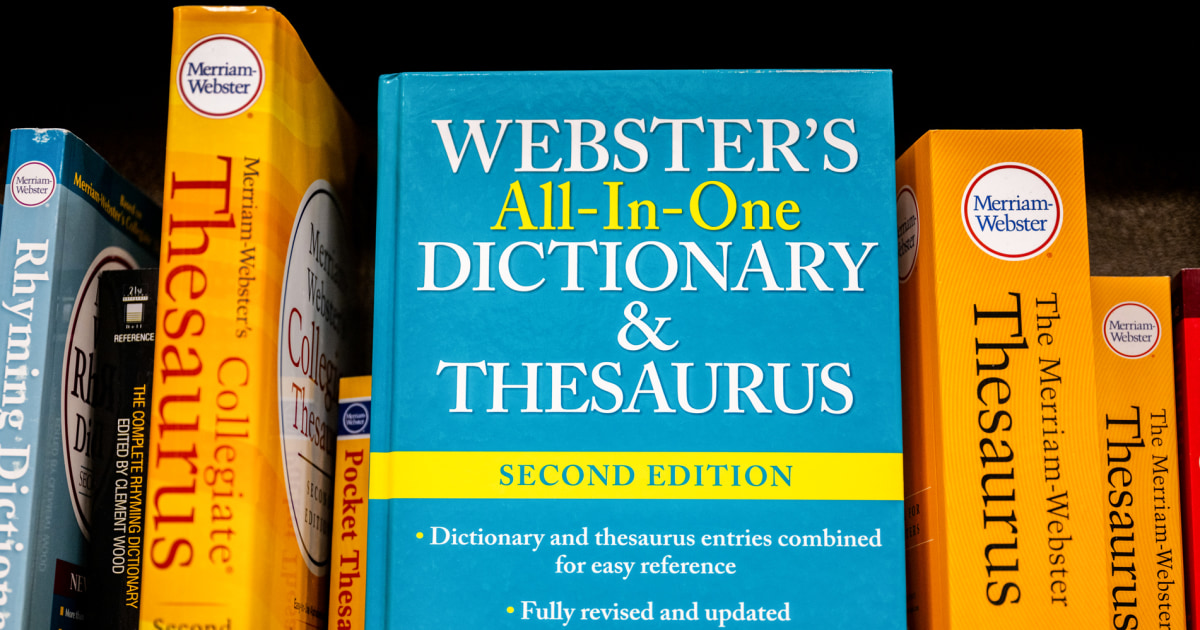
After yet another year of high-profile news stories and internet trends, Merriam-Webster has chosen one word to sum up 2025: Slop.
The dictionary publisher defined it as “digital content of low quality that is produced usually in quantity by means of artificial intelligence,” and said it reflected the “absurd videos, off-kilter advertising images, cheesy propaganda, fake news that looks pretty real, junky AI-written books” that have invaded people’s social media feeds this year.
“All that stuff dumped on our screens, captured in just four letters: the English language came through again,” the company said.
Other words and phrases that stood out for Merriam-Webster’s editors were: Gerrymander; touch grass; performative; tariff; six seven and conclave.
The company also gave a shoutout to Lake Chargoggagoggmanchauggagoggchaubunagungamaugg, an alternative name for Webster Lake in Massachusetts, which began appearing in the most-searched list of words on merriam-webster.com thanks to its appearance in the online gaming world Roblox.
Merriam-Webster’s word of the year selection is based largely on spikes in search data. This often means its annual pick is tied to current events, as it was in 2020 and 2021 when the respective words were “pandemic” and “vaccine.”
Last year, the dictionary chose “polarization,” noting that searches in 2024, a presidential election year, reflected “the desire of Americans to better understand the complex state of affairs in our country and around the world.”
Oxford University Press, which publishes the Oxford English Dictionary, has taken a different approach recently by incorporating public input and analyzing data to determine its word of the year. This year, Oxford selected “rage bait,” defined as “online content deliberately designed to elicit anger or outrage.”
The three-day voting process drew more than 30,000 votes, according to Oxford University Press.
“With 2025’s news cycle dominated by social unrest, debates about the regulation of online content, and concerns over digital wellbeing, our experts noticed that the use of rage bait this year has evolved to signal a deeper shift in how we talk about attention — both how it is given and how it is sought after — engagement, and ethics online,” the publisher said.
Oxford University Press’ word of 2024 was “brain rot,” which it defined as the “supposed deterioration of a person’s mental or intellectual state, especially viewed as the result of overconsumption of material (now particularly online content) considered to be trivial or unchallenging.”



