

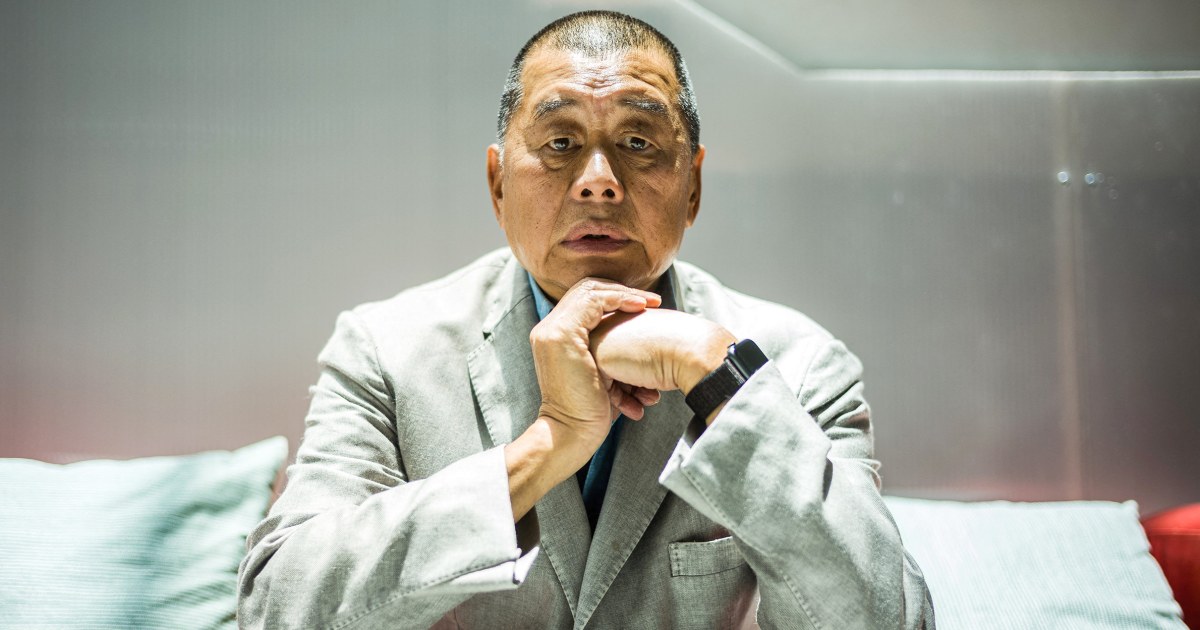
HONG KONG — A Hong Kong court is set to rule in the landmark national security trial of Jimmy Lai, a pro-democracy activist and media mogul whose case has drawn international scrutiny and become a symbol of Beijing’s crackdown on dissent in the Chinese territory.
Lai, one of the most prominent critics of China’s ruling Communist Party, was arrested in 2020 shortly after Beijing imposed a sweeping national security law in response to anti-government protests that roiled Hong Kong for months in 2019 and sometimes turned violent.
He has pleaded not guilty to two charges of colluding with foreign forces under the national security law, as well as a charge of conspiracy to publish seditious materials under legislation from Hong Kong’s time as a British colony.
The verdict by the High Court will be handed down at 10 a.m. local time (9 p.m. ET Sunday), according to a notice from the judiciary. Lai, who turned 78 last week and faces life in prison if convicted, would be sentenced at a later date and is allowed to appeal.
The 156-day trial, which began in December 2023 and was heard by three judges handpicked to hear national security cases, has been criticized by Western governments and rights groups as politically motivated. Both the United States and Britain have called for Lai, a British citizen, to be released.
President Donald Trump has repeatedly promised to “free” Lai, drawing a warning last year from Hong Kong’s top leader, John Lee, not to interfere in Hong Kong’s internal affairs. A White House official confirmed to NBC News last month that Trump discussed Lai’s case with Chinese President Xi Jinping during their meeting in South Korea in October.

Lai’s trial is seen as a test of judicial independence and press freedom in Hong Kong, which was promised its Western-style civil liberties would be preserved for 50 years upon its return to Chinese rule in 1997.
The Hong Kong and Chinese governments say Lai has received a fair trial and that the criticism is an attempt to undermine the city’s rule of law.
A Chinese Foreign Ministry spokesperson said Friday that Beijing firmly supports the Hong Kong government in “bringing criminals who endanger national security to justice.”
Lai has spent nearly five years in solitary confinement since his arrest in 2020, during which time he has been convicted on multiple other charges including unauthorized assembly and fraud. His family and supporters have expressed growing concern about his health, as Lai suffers from diabetes and high blood pressure as well as heart palpitations.
The Hong Kong government says Lai has received “adequate and comprehensive” medical services while in custody and that it separates people such as Lai from other prisoners at their own request to ensure their “personal safety and well-being.”
Prosecutors said Lai was the “mastermind” of an alleged conspiracy with activists and others to lobby foreign countries, including the U.S., to impose sanctions and other forms of pressure against China and Hong Kong. They cited meetings Lai had with U.S. officials including Mike Pence, the vice president at the time, at the height of the 2019 protests.
Lai is also accused of using Apple Daily, the now-defunct pro-democracy tabloid he founded in 1995, to publish a series of allegedly seditious articles that prosecutors said incited hatred of the Hong Kong and Chinese governments.
Lai, who spent 52 days testifying, denied using his overseas connections to influence foreign policy on China and Hong Kong. He also said he never intended to “pollute” his readers’ minds but was only commenting on facts.
John Burns, an emeritus professor specializing in Chinese politics at the University of Hong Kong, said he was “not so sure” how significant Lai’s conviction would be for Hong Kong’s press freedom and autonomy.
Though the Lai trial is Hong Kong’s most high-profile case stemming from the crackdown, Burns said, two other cases from last year had “much more significant” implications for the city’s human rights situation.
They include the conviction of two journalists accused of sedition over their work for the now-defunct pro-democracy newspaper Stand News, and the subversion charges against 47 pro-democracy figures over their involvement in an unofficial primary election, 45 of whom were convicted or pleaded guilty.
Open dissent has been chilled in Hong Kong under the Beijing-imposed national security law and related local legislation, both of which officials say were necessary to restore stability after the 2019 protests. Most of the city’s pro-democracy figures have been imprisoned, quit politics or moved overseas.
The Lai verdict comes a day after Hong Kong’s last major opposition party, the Democratic Party, disbanded after a vote by its members, who cited pressure from Chinese officials or intermediaries.
It also comes a week after a “patriots only” legislative election held under rules that were changed in 2021 to require national security vetting of candidates. Officials have defended the new rules as necessary to restore stability, but critics say they have sidelined groups such as the Democratic Party and left the legislature without any meaningful opposition.
Voter turnout was 31.9%, a near-record low that is far lower than it was in elections before the legal overhaul.



