

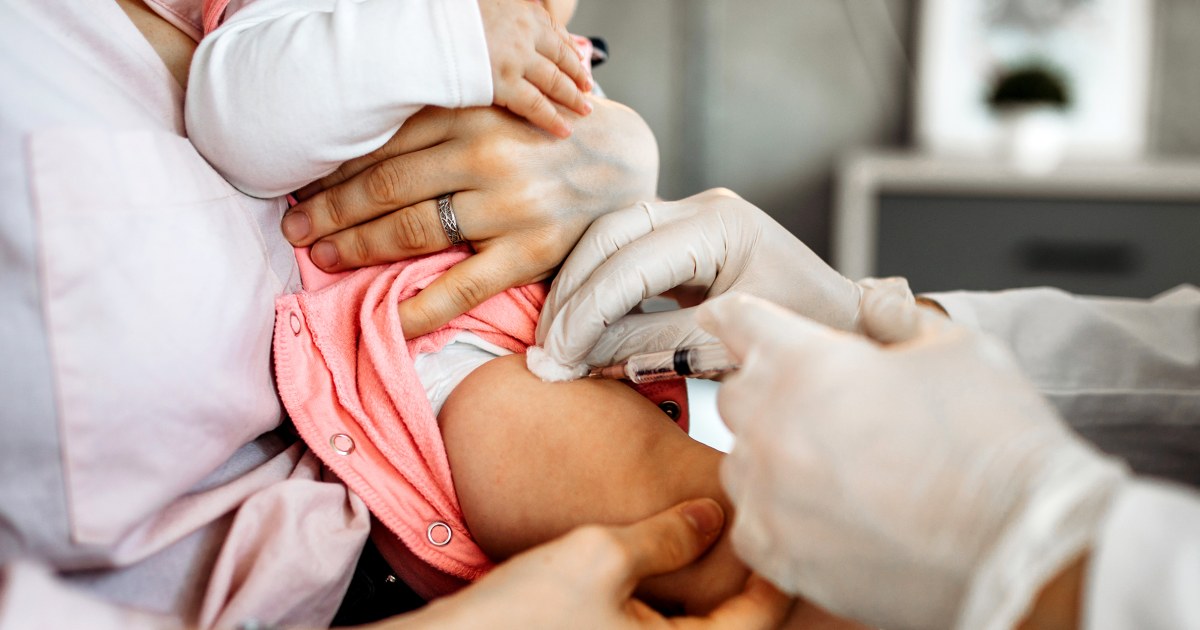
A group of advisers to the Centers for Disease Control and Prevention is preparing to vote on whether the agency should scrap its long-standing recommendation that every baby get a hepatitis B vaccination within 24 hours of birth.
The shot — universally recommended for newborns in the U.S since the early 1990s — is credited with driving down cases of acute hepatitis B infections in kids by 99%. The virus, which can be passed from mother to baby during childbirth, can lead to liver disease and early death. There is no cure.
Despite its success, the hepatitis B vaccine has become the latest target of skeptics who question whether the benefits of the shot outweigh potential risks.
A vaccine given on “day one has a risk of neonatal fever, which causes more interventions” like blood work to determine the cause of the fever, said Dr. Kirk Milhoan, a pediatric cardiologist who practices at Driscoll Children’s Hospital in Corpus Christi, Texas.
Milhoan has been a member of the CDC’s Advisory Committee on Immunization Practices (ACIP) since June, when Health Secretary Robert F. Kennedy Jr. fired all of its members, replacing them with his own appointees. On Monday, Milhoan was named the new ACIP chair, replacing Martin Kuldorff, a biostatistician who previously cast doubt on childhood vaccines, including the one for hepatitis B.
Dr. Sean O’Leary, a pediatric infectious disease expert and spokesman for the American Academy of Pediatrics, said he has never seen a serious reaction after “thousands of babies” have been given the hepatitis B vaccine.
“I never once saw a fever actually associated with hepatitis B vaccine,” O’Leary said at a media briefing Tuesday.
And a review of more than 400 studies found no evidence that the birth dose of the vaccines causes any short- or long-term health problems. On the contrary, the review of research, published Tuesday by the Vaccine Integrity Project, an independent group of experts led by the Center for Infectious Disease Research and Policy at the University of Minnesota, found that giving newborns the hepatitis B vaccine has prevented more than 6 million infections and nearly 1 million hospitalizations. The paper was not published in a peer-reviewed journal.
ACIP is scheduled to meet Thursday and Friday. The committee makes recommendations to the CDC director, who can then choose whether to adopt them. While a vote against newborn vaccination does not prohibit doctors from administering the shot, the panel’s recommendations influence insurance coverage.
It’s unclear whether the ACIP members would vote to eliminate or delay that first dose of a hepatitis B vaccine by a month or two. The agenda posted online as of Tuesday described the meeting in broad strokes, offering no details about who would be presenting data. A vote on the vaccine was supposed to take place at an ACIP meeting in September, but it was tabled because of confusion among committee members.
Hepatitis B can spread through sexual contact and sharing drug paraphernalia, such as needles. It can also pass from person to person if they share common household items such as toothbrushes or razors.
Milhoan said any decision to give newborns hepatitis B vaccines should be made based on clinicians’ individual assessments of the babies’ risk for infection — that is, whether a pregnant woman tests positive for the infection or has a “questionable infectious disease background.” At September’s ACIP meeting, the panel voted unanimously to recommend testing all pregnant women for hepatitis B.
But not all pregnant women receive prenatal care, and if they do, not all feel comfortable speaking frankly with their doctors.
Milhoan appeared to dismiss the argument that women may not divulge activities that could increase their risk for hepatitis B because of stigma.
“I hope they love their baby more than they love their pride,” he said.
A 2019 report showed that just 84% to 88% of pregnant women are tested for the virus. Without vaccination, 90% of babies exposed to the hepatitis B virus during birth develop chronic hepatitis, according to the American Academy of Pediatrics.
The hepatitis B vaccine is not the only immunization Milhoan has cast doubt on. He is a senior fellow at the Independent Medical Alliance — formerly known as the Front Line Covid-19 Critical Care Alliance — a group that has advocated for unproven treatments for Covid. His biography on the IMA’s website says he “is dedicated to treating patients affected by acute SARS-CoV-2 infections, Long Covid, and vaccine-related cardiovascular toxicity due to the spike protein.” Last year, he participated in an event with Rep. Marjorie Taylor Greene, R-Ga., about alleged injuries associated with the shots.
Milhoan has been especially critical of Covid vaccines for their link to a small but increased risk of a heart condition called myocarditis in young men. The link was not seen in clinical trials; it was detected in 2021, soon after the shots were made available.
“The rates of myocarditis were much higher than anyone thought,” Milhoan said. He said he was labeled an “anti-vaxxer” for speaking out about the potential risk.
“People were saying, ‘Are you against the vaccines?’ I’m just trying to show you what we’re seeing,” he said.
Over the weekend, Dr. Vinay Prasad, the vaccine chief at the Food and Drug Administration, told staff members in a memo that an internal review found that at least 10 children died “after and because of” Covid vaccines and suggested the deaths were tied to myocarditis. Prasad did not provide any evidence to back up the claim.
Studies have shown that myocarditis is more commonly associated with Covid infection than vaccination.
This week’s ACIP meeting is also expected to include discussion of the use of aluminum adjuvants in vaccines. The ingredient is added to prompt the immune system to react better to vaccines. A study of more than 1 million people, published over the summer, found that aluminum adjuvants were not linked to an increased risk of 50 chronic conditions, including autoimmune diseases, allergies and autism.
The meeting follows months of upheaval within the CDC, including mass firings and significant changes to its messaging. On Nov. 19, a CDC webpage that once stated unequivocally that vaccines do not cause autism was rewritten to suggest, without evidence, that health officials had “ignored” possible links between the shots and the disorder.



