

Suddenly, it’s cool to be Chinese on the internet.
Over the past month, many on TikTok may have been told that they are “turning Chinese.” The intentionally absurd trend has put a spotlight on traditional wellness habits from China, fueled partly by ethnically Chinese internet users who are embracing the joke.
“I’m gonna let you in on a little secret, OK? Tomorrow you are turning Chinese,” said creator Sherry Zhu, 23, in a video that reached 2.7 million views. “And I know that sounds intimidating, but there is no point in fighting it now. Because you are the chosen one.”
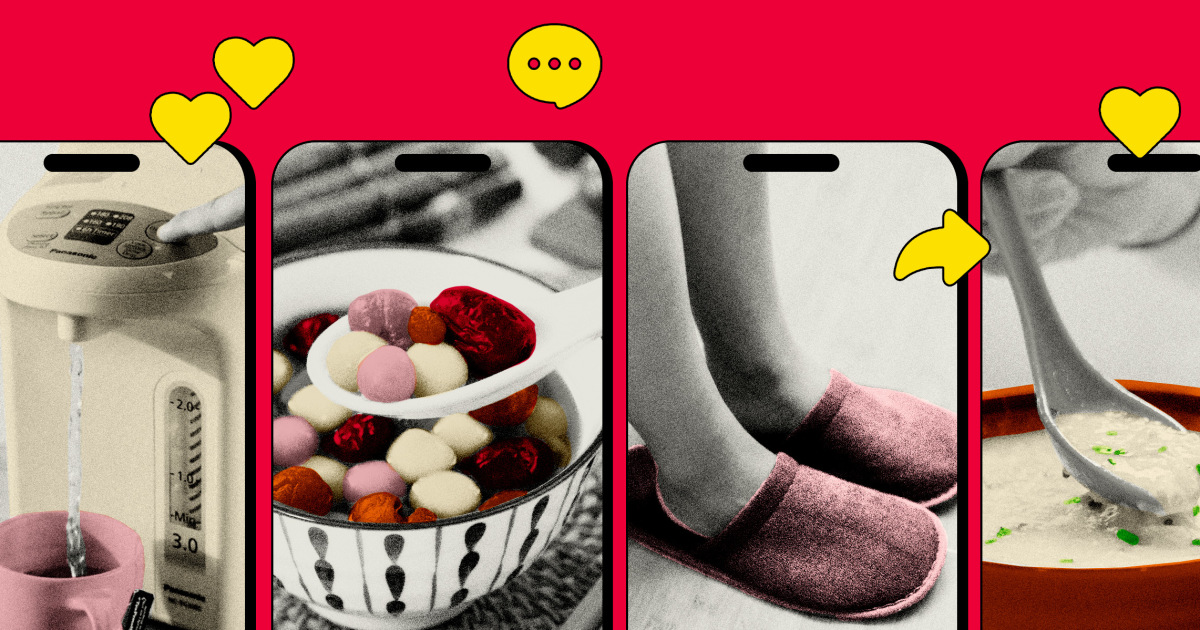
The video, posted this month, has helped foster a frenzy of curiosity for Chinese culture online. Using hashtags like #becomingchinese and #chinesebaddie, many on TikTok are showcasing how they’re trying out Chinese-inspired lifestyle practices and cooking Chinese dishes. The videos often feature people recording themselves drinking hot water, making apple herbal tea, having bone broth for breakfast and wearing house slippers.
Chinese Americans have often faced xenophobia and sinophobia, particularly after Chinese Americans became the targets of racist attacks during the coronavirus pandemic. But the “becoming Chinese” trend is part of a broader a shift in attitudes toward China in the past year.
According to poll results released in October by the Chicago Council on Global Affairs, 53% of Americans say they favor U.S. engagement and cooperation with China, a major trading partner and strategic rival, up from 40% in 2024.
When a nationwide TikTok ban was looming in the United States, many American users flocked to the Chinese social media app RedNote, which resulted in a joyful cultural exchange between American users and their Chinese counterparts. Travel content online showing foreigners interacting with people in China has also helped put the country — which has a separate internet ecosystem — on the radar of more people in the West.
“For a long time, Chinese culture was stereotyped as poor, rude, uneducated, smelly or loud,” said Angela Shan Hu, a Chinese Italian TikTok user. “Now people are seeing it as a culture with centuries of history and wisdom, especially when it comes to medicine and preventative health.”
The “becoming Chinese” trend builds on a related meme that has gained traction over the past few months: people claiming to be “at a very Chinese time in my life.” The phrase circulated as a joke among Chinese Americans, as well as non-Chinese internet users, with posts often set to the 1983 song “Yi Jian Mei” by Fei Yu-ching.
Even Hong Kong-American comedian Jimmy O. Yang partook in the meme in November, singing the popular Chinese song while wearing Adidas’ Tang dynasty-inspired Chinese New Year jacket.
According to online database Know Your Meme, “You met me at a very Chinese time in my life” is a parody of the iconic final line from “Fight Club,” in which the unnamed protagonist tells Marla Singer: “You met me at a very strange time in my life.” Know Your Meme describes the parody phrase as “ultimately meaningless and purposefully absurd.”
Zhu, who is credited for helping the trend become more mainstream, said that when she tells people they’re “turning Chinese,” it’s a humorous way of pointing to an already percolating “curiosity and admiration for Chinese culture.”
“The humor that I share online is the humor that I share amongst my friends. Like, if my friends are wearing house slippers or using chopsticks, I’m like, ‘Wow, you’re so Chinese.’ Like, ‘That’s my Chinese buddy right there,’” Zhu said. “So whether it be the interest in Chinese culture that has been growing already, or my particular delivery, I definitely do feel like something struck a chord.”
Still, some Chinese Americans have expressed hurt and skepticism at the sudden switcheroo, noting that they grew up being bullied for their cultural habits, and that it wasn’t long ago that Chinese Americans were blamed for Covid-19 and being attacked in the streets of their own cities.
Jennifer Lee, 24, is among those experiencing mixed feelings about the flurry of “becoming Chinese” content.
“There’s the two sides of me where one side is like, ‘Yeah, welcome. Thank you for actually learning and appreciating,’” Lee said. “But then the other side is wondering if they’re just jumping on the bandwagon just to get views … like, you’re going to use someone’s culture that you’ve spent your life making fun of just to get your 15 seconds.”
Lee said she worries the trend will become just another fad that doesn’t lead to lasting respect and appreciation for Chinese culture.
I hope this trend helps move us toward a less racist world, where culture doesn’t need to be gatekept to be protected but can be appreciated
— Angela Shan Hu, a Chinese Italian TikTok user
“I wouldn’t even say this trend is cultural appropriation, it’s more just turning it into a meme for them to get something out of it,” Lee said. “It almost makes it feel like we’re the laughingstock again, and they’re just using it as their content.”
Zhu said she empathizes with these sentiments, having experienced sinophobic bullying throughout her life, as well. But she said she believes creating more visibility around Chinese culture can “reduce misunderstanding over time” without erasing the history of pain.
Hu, who shared her own TikTok video welcoming non-Chinese people into her culture, also shared a different perspective.
“I don’t think the people who hated Chinese people in 2020 suddenly love us now, those people are still racist. But I do think many others are unlearning racism,” Hu said. “There’s no way forward if we keep holding everything back.”
She added that she feels the people participating in the trend are genuinely appreciating rather than appropriating her culture, because they are applying Chinese practices while openly acknowledging their Chinese origins rather than claiming ownership.
“I hope this trend helps move us toward a less racist world, where culture doesn’t need to be gatekept to be protected but can be appreciated,” Hu said. “And if that leads to a world where the next generation doesn’t feel the need to shrink themselves, then this moment is worth embracing.”



