

It’s not just the Europeans.
In a speech likely to go down as a historic address, Canadian Prime Minister Mark Carney gave perhaps the starkest articulation yet of what he called “a rupture, not a transition” in the geopolitical landscape.
“We know the old order is not coming back. We shouldn’t mourn it. Nostalgia is not a strategy,” he bluntly told an audience in Davos on Tuesday. “Great powers,” he said, “have begun using economic integration as weapons, tariffs as leverage, financial infrastructure as coercion, supply chains as vulnerabilities to be exploited.”
Carney also used his speech to say what many see as the quiet part out loud: That the ideas behind this Western-dominated world were often a “useful” fiction. The U.S. and its allies have often applied a selective version of these rules, exempting themselves “when convenient,” he said.
Sifting through the rubble of World War II, Western powers established multilateral institutions such as the United Nations, the International Monetary Fund and the North Atlantic Treaty Organization. Generally, American governments accepted that investment into these projects would pay dividends in global influence, protecting American interests abroad.
The result, for the U.S. and Europe, is what remains the world’s most tightly enmeshed military, economic and cultural bond. They have the world’s largest bilateral trading relationship, worth around $1,966 trillion. This means more than $5 billion of goods and services effectively cross the Atlantic Ocean every day, comprising 30% of the world’s trade.
While Europe relies heavily on U.S. might, with American troops, equipment and nuclear missiles stationed at bases across the continent, it’s also true that European components are vital in American military gear, such as the Norwegian-made missiles and British ejector seat aboard the F-35 fighter jet.
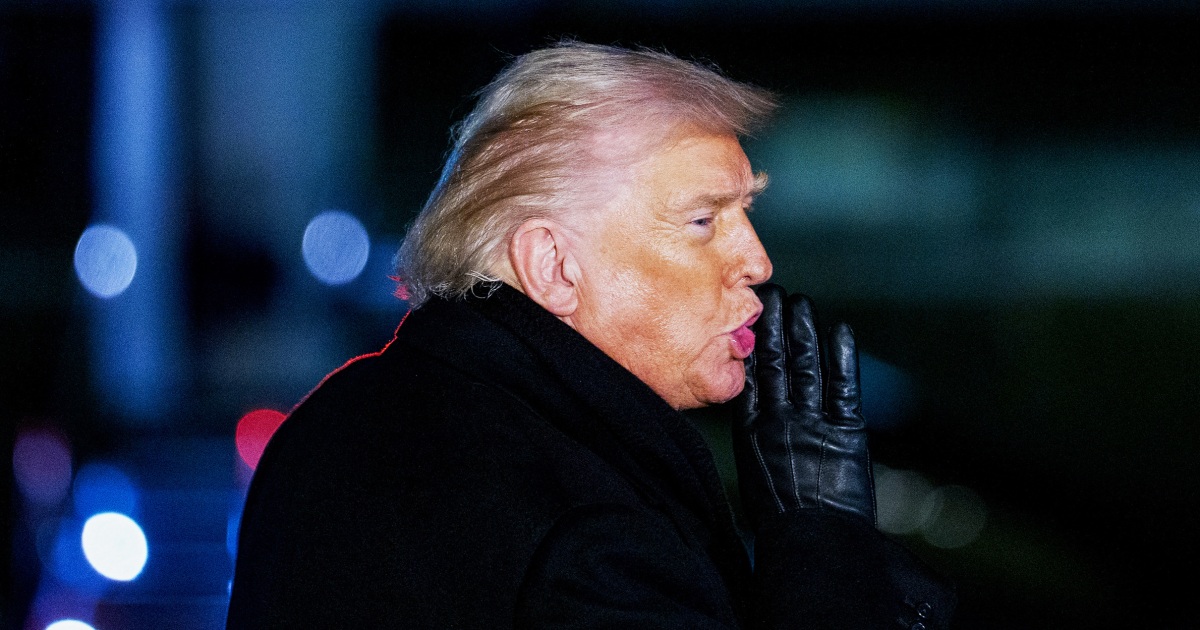
For some European officials and experts, Trump’s conduct has irrevocably changed the dynamic of this bond.

Some have attempted to use deference and even flattery to counter Trump’s hostile policy and rhetorical overtures. There seems to be a growing acceptance that has not worked.
If the U.S. used military force to oust Denmark from Greenland, NATO would effectively be finished as a concept. The president says he needs control of the island for national security, to prevent Russia and China from seizing it — though his claims have been rejected by European officials and many analysts.
The White House did not immediately respond to a request for comment from NBC News on the comments from Von der Leyen, Carney and others.
But Trump’s threat of tariffs has already shaken Europe.
“Until now we tried to appease the new president,” Belgian Prime Minister Bart De Wever said during a panel discussion at Davos. “But now so many red lines have been crossed that you have to choose your self-respect. Being a happy vassal is one thing. Being an unhappy slave is something else entirely.”
Europe has for years talked a good game in unshackling itself from American military dependence at least, but it remains to be seen what it does now.
Canada, meanwhile, is forging a “new strategic partnership” with China — leading many analysts to observe that Trump’s policies may be pushing allies into Beijing’s embrace.
Carney told so-called “middle powers,” such as his, to “stop invoking the ‘rules-based international order’ as though it still functions as advertised.”
But, he said: “We believe that from the fracture, we can build something better, stronger, more just.”



