

WASHINGTON — Israeli and Arab officials have told the Trump administration in recent days that they believe the Iranian regime may not yet be weakened to the point where U.S. military strikes would be the decisive blow that topples it, according to a U.S. official, a former U.S. official briefed on the discussions, a person familiar with the Israeli leadership’s thinking and two Arab officials.
The Israeli and Arab officials have suggested that President Donald Trump, who is weighing military action in Iran in response to the regime’s deadly crackdown on protesters, hold back on large-scale strikes for now, with some of them preferring to wait until the regime is even more strained, the sources said. They also noted the situation in Iran is rapidly developing, with the stability of the regime potentially changing quickly in one direction or the other.
The conversations, which have involved American political and military leaders, underscore the complex dynamic Trump faces as he weighs possible options for U.S. action in Iran. Trump, who is expected hold a meeting Tuesday with his national security team to review options, has threatened Iran with U.S. military action if the regime is killing protesters.
White House officials have said Trump is considering a range of possible options as protests enter their third week, including ones that don’t involve military force. Members of Trump’s national security team held a meeting Tuesday morning on Iran that he did not attend, according to White House press secretary Karoline Leavitt.
A spokesperson for the Israeli Embassy in Washington, D.C. declined to comment.
A White House official said in a statement, “All options are at President Trump’s disposal to address the situation in Iran. The president listens to a host of opinions on any given issue, but ultimately makes the decision he feels is best.” The official added that Trump “means what he says,” pointing to military action he ordered against Iran in June and earlier this month to capture the leader of Venezuela.
Trump posted a message to protesters in Iran on social media Tuesday urging them to “KEEP PROTESTING — TAKE OVER YOUR INSTITUTIONS” and telling them “HELP IS ON ITS WAY.”
Leavitt said Monday that “airstrikes would be one of the many, many options that are on the table” and “diplomacy is always the first option for the president.” Iran has signaled a willingness to negotiate with the Trump administration to avert strikes, but Trump posted on social media Tuesday that he’d canceled all meetings with Iranian officials “until the senseless killing of protesters STOPS.” The president told reporters on Sunday that a summit between U.S. and Iranian officials was being arranged.
One of the Arab officials said there is a “lack of enthusiasm from the neighborhood” for U.S. strikes in Iran right now. Another expressed concern that “any attack or escalation by Israel or the U.S. will unite Iranians” and noted there was a rally-around-the-flag effect in Iran after the American and Israeli attack there in June.
Israeli officials have told the Trump administration that while they fully support regime change in Iran, and U.S. efforts to facilitate it, they are concerned that outside military intervention at this moment might not finish the job that protesters have started, the current U.S. official, the former U.S. official and the person familiar with the Israeli leadership’s thinking said.
They said the Israelis have suggested other types of U.S. action aimed at destabilizing the regime and supporting the protesters could help further weaken the regime to the point where larger strikes could then be decisive.
Those possible actions include boosting communications for Iranians around the country to circumvent the regime’s internet blackout, increasing or strengthening economic sanctions, launching a cyberattack, or even taking very targeted military action against specific Iranian leaders — that could help facilitate a broader breakdown in the regime, the sources said.
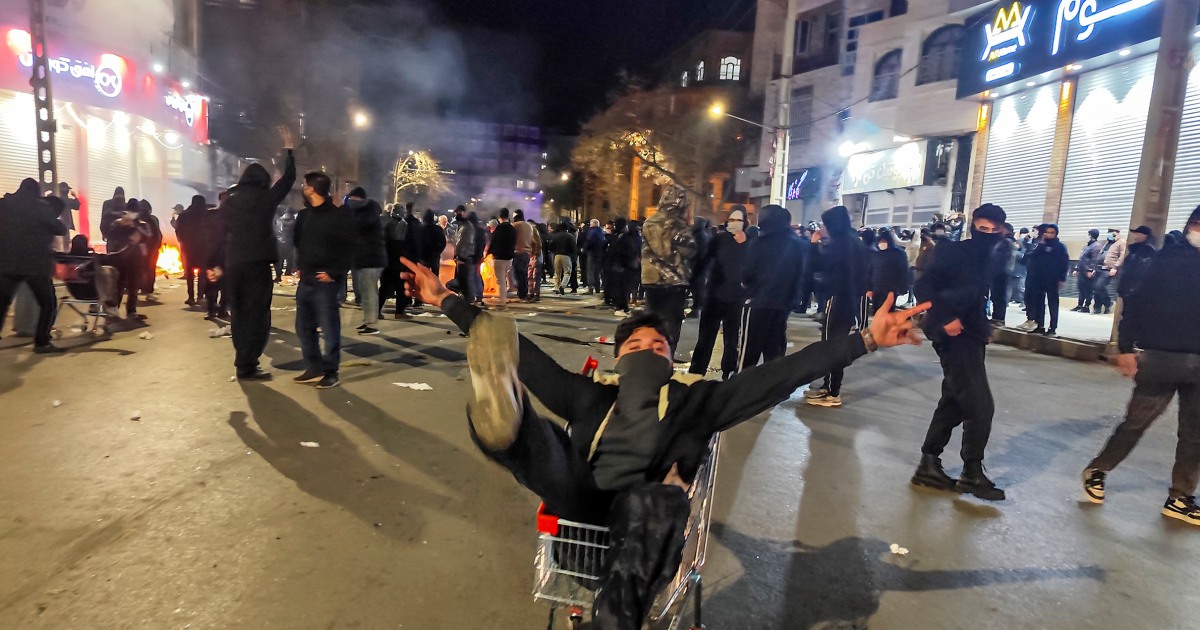
The protests, which were sparked by economic grievances as the rial currency crashed and inflation soared, have now morphed into one of the biggest challenges the Iranian regime has faced in the theocracy’s 47-year history, as thousands of people have taken to the streets to demand the end of the ruling clergy.
The demonstrations began on Dec. 28, with people taking to the streets to protest the regime and the growing economic crisis that has caused inflation and soaring prices in the country. The Iranian government cut internet access and phone service in the country last week, making it more difficult for protesters to organize and for the world outside of Iran to see what is happening there and assess the numbers of dead, wounded and imprisoned.
Reports from inside Iran indicate a rising number of protesters have been killed, with many more injured or arrested, as Iranian security forces continue a bloody crackdown that’s included opening fire on crowds using live ammunition. Iranian authorities have released no official numbers on deaths or injuries.
The U.S.-based organization Human Rights Activists News Agency said Tuesday morning that about 2,000 people have been killed. More than 16,000 people have been detained, according to the group.
Iran’s Parliament speaker said Sunday that if the U.S. attacks Iran, the American military and Israel would be “legitimate targets” for retaliation.
Asked Sunday about Iranian threats of retaliation, Trump told reporters, “If they do that, we will hit them at levels that they’ve never been hit before.”



